

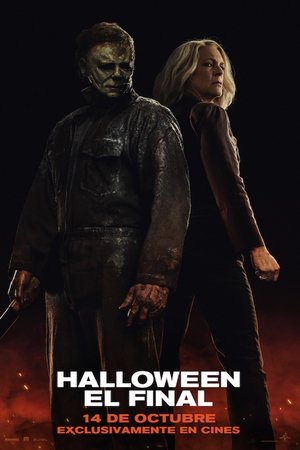
Halloween: La noche final (2022)
Resumen
Cuatro años después de los acontecimientos de Halloween Kills, Laurie vive con su nieta Allyson (Andi Matichak) y está a punto de terminar de escribir sus memorias. Nadie ha vuelto a ver a Michael Myers desde entonces. Laurie, después de permitir que el espectro de Myers controlara su realidad durante décadas, ha decidido por fin dejar atrás el miedo y la rabia para dedicarse a vivir. Pero cuando acusan a Corey Cunningham (Rohan Campbell) de matar al niño al que cuidaba, se desencadena una cascada de violencia que obligará a Laurie a enfrentarse de una vez por todas con una maldad que no puede controlar.
Cuatro años después de los eventos de Halloween en 2018, Laurie ha decidido liberarse del miedo y la ira y abrazar la vida. Pero cuando un joven es acusado de matar a un niño que estaba cuidando, se enciende una cascada de violencia y terror que obligará a Laurie a enfrentarse finalmente al mal que no puede controlar, de una vez por todas.
Four years after the events of Halloween in 2018, Laurie has decided to liberate herself from fear and rage and embrace life. But when a young man is accused of killing a boy he was babysitting, it ignites a cascade of violence and terror that will force Laurie to finally confront the evil she can’t control, once and for all.
Actores Principales

Jamie Lee Curtis
Laurie

Andi Matichak
Allyson

James Jude Courtney
The Shape

Rohan Campbell
Corey

Will Patton
Frank

Jesse C. Boyd
Officer Mulaney

Michael Barbieri
Terry

Destiny Mone
Stacy

Joey Harris
Margo

Marteen
Billy
Tráiler



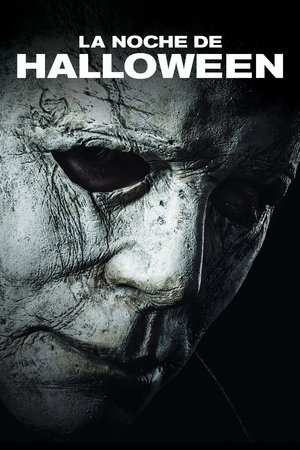
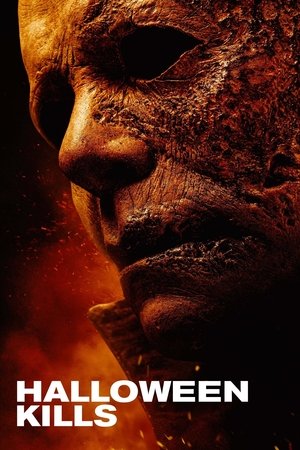
Reseñas
Una reseña de Marco-Hugo Landeta Vacas
(CASTELLANO) Después de tantas décadas asociando Halloween con una figura casi abstracta del mal, lo más interesante de Halloween: El final es que David Gordon Green intenta desplazar la pregunta. Ya no se trata únicamente de qué hace Michael Myers, sino de qué ocurre en una comunidad que lleva demasiado tiempo viviendo alrededor del miedo, el trauma y la violencia. Ese cambio de enfoque me pareció más interesante de lo que esperaba. La película introduce a Corey como alguien marcado por la culpa, el rechazo y una ciudad que parece haber decidido quién es antes de escucharle. Lo que empieza como marginación sirve para explorar una idea incómoda: hasta qué punto una persona puede deformarse cuando todo lo que recibe de los demás es desprecio, sospecha y humillación. Ahí es donde la película se separa del slasher convencional. El mal deja de aparecer únicamente como una fuerza externa y empieza a plantearse como algo que puede contagiarse, alimentarse o encontrar terreno fértil en alguien roto. No significa justificar la violencia, pero sí preguntarse de dónde nace. Esa ambigüedad me interesó mucho más que limitarse a repetir otra persecución de Michael Myers. Corey funciona porque resulta fácil sentir cierta empatía por él. La película observa cómo una comunidad puede convertir a alguien en recipiente de su miedo y de su rabia, y cómo la victimización puede acabar transformando a una persona. No siempre desarrolla esta idea con toda la profundidad que merece, pero al menos intenta hacer algo distinto con una saga que lleva décadas repitiendo sus símbolos. También agradecí que algunas muertes recuperen la creatividad que uno espera de un slasher. Hay violencia gráfica, humor macabro y un gusto por el castigo irónico. Cuando Halloween: El final se permite ser desagradable e imaginativa, vuelve a recordar por qué esta saga sigue teniendo capacidad para generar imágenes memorables. Jamie Lee Curtis continúa siendo el gran ancla emocional. Laurie ya no puede entenderse solo como la superviviente eterna frente a Michael; es alguien cuya identidad ha quedado construida durante décadas alrededor de ese trauma. La película intenta imaginar qué ocurre cuando una persona decide que no quiere seguir viviendo únicamente en función de aquello que la destruyó. Curtis aporta cansancio, dureza y vulnerabilidad. Michael funciona mejor cuanto menos intenta la película explicarlo. Su presencia tiene algo casi mitológico: no necesita una psicología clara porque representa una amenaza que cada personaje interpreta de manera distinta. El problema aparece cuando el guion quiere convertir esa idea en teoría y verbalizar demasiado qué significa el mal. Ahí pierde misterio. La relación entre Laurie y Michael tiene además algo extrañamente íntimo después de tantos años. No es afecto, por supuesto, sino una dependencia narrativa casi enfermiza: uno existe en la historia del otro. Esa conexión acaba pareciendo más cercana a la de dos figuras condenadas a repetirse eternamente que a una simple oposición entre heroína y asesino. La película, sin embargo, es muy irregular. Durante largos tramos parece más interesada en Corey que en cerrar la historia que el público llevaba esperando desde las entregas anteriores. Entiendo perfectamente que eso desconcertara a muchos seguidores. Como experimento me parece valiente; como conclusión de una trilogía, resulta extraño y desequilibrado. También tiene tendencia a subrayar sus ideas. La violencia como contagio, el trauma colectivo de Haddonfield y la necesidad de dejar atrás el miedo son conceptos interesantes, pero no siempre necesitan que los personajes los expliquen. El cine de Carpenter funcionaba muchas veces porque el mal permanecía opaco. Aquí, cuando se intenta racionalizar demasiado, pierde parte de esa fuerza. Aun así, prefiero una entrega que intente algo raro a otra secuela completamente automática. No me parece un cierre redondo, pero sí una película con ideas, momentos de violencia bien planteados y una voluntad real de hablar del daño que queda cuando el monstruo ya forma parte de la identidad de una comunidad. Halloween: El final no es especialmente terrorífica y a veces parece estar peleándose consigo misma entre ser una despedida de Laurie y Michael y ser otra película distinta. Ese conflicto interno la debilita, pero también la hace más curiosa que muchas secuelas previsibles. Me quedo con su mirada al mal como algo menos absoluto y más contagioso, con Jamie Lee Curtis y con varios momentos de violencia imaginativa. Como gran final definitivo, se queda corta; como rareza dentro de Halloween, tiene bastante interés. (ENGLISH) After so many decades of associating Halloween with an almost abstract figure of evil, the most interesting thing about Halloween Ends is that David Gordon Green tries to shift the question. It is no longer only about what Michael Myers does, but about what happens to a community that has spent too long living around fear, trauma and violence. That change of focus interested me more than I expected. The film introduces Corey as someone marked by guilt, rejection and a town that seems to have decided who he is before listening to him. What begins as marginalization becomes a way of exploring an uncomfortable idea: how far a person can be deformed when all they receive from others is contempt, suspicion and humiliation. This is where the film separates itself from the conventional slasher. Evil stops appearing only as an external force and begins to be treated as something that can spread, feed itself or find fertile ground in someone already broken. That does not mean justifying violence, but asking where it comes from. I found that ambiguity far more interesting than simply repeating another Michael Myers chase. Corey works because it is easy to feel some sympathy for him. The film looks at how a community can turn someone into a vessel for its fear and anger, and how victimization can eventually change a person. It does not always develop this idea with the depth it deserves, but at least it tries to do something different with a franchise that has spent decades repeating its symbols. I also appreciated that some of the kills recover the creativity one expects from a slasher. There is graphic violence, macabre humor and a taste for ironic punishment. When Halloween Ends allows itself to be nasty and imaginative, it reminds you why this franchise can still produce memorable images. Jamie Lee Curtis remains the film's emotional anchor. Laurie can no longer be understood only as the eternal survivor opposite Michael; she is someone whose identity has been built for decades around that trauma. The film tries to imagine what happens when a person decides they no longer want to live entirely in relation to what destroyed them. Curtis brings weariness, toughness and vulnerability. Michael works best when the film tries least to explain him. His presence is almost mythic: he does not need a clear psychology because he represents a threat that each character understands differently. The problem comes when the screenplay tries to turn that idea into theory and verbalize too much about what evil means. That is where the mystery weakens. The relationship between Laurie and Michael also has something strangely intimate after so many years. It is not affection, of course, but an almost unhealthy narrative dependence: each exists inside the other's story. Their connection starts to feel less like a simple opposition between heroine and killer and more like two figures condemned to repeat each other forever. The film is, however, very uneven. For long stretches it seems more interested in Corey than in closing the story audiences had been waiting to see resolved since the previous entries. I can understand why that confused many fans. As an experiment, it feels bold; as the conclusion to a trilogy, it feels strange and unbalanced. It also has a tendency to underline its ideas. Violence as contagion, Haddonfield's collective trauma and the need to move beyond fear are interesting concepts, but they do not always need characters to explain them. Carpenter's cinema often worked because evil remained opaque. Here, whenever the film tries too hard to rationalize it, some of that power is lost. Even so, I prefer an installment that tries something odd to another completely automatic sequel. I do not think it is a fully satisfying conclusion, but it is a film with ideas, some well-staged violence and a genuine desire to talk about the damage left behind when the monster has become part of a community's identity. Halloween Ends is not especially frightening, and at times it seems to be fighting with itself between being a farewell to Laurie and Michael and being a different film altogether. That internal conflict weakens it, but also makes it more curious than many predictable sequels. I am left with its view of evil as something less absolute and more contagious, with Jamie Lee Curtis and with several moments of imaginative violence. As a definitive grand finale, it falls short; as a strange entry in Halloween, it has real interest.