


El Día del Fin del Mundo (2020)
Resumen
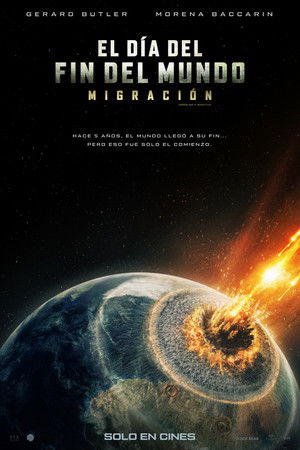
Un matrimonio a punto de separarse debe tratar de garantizar la seguridad de su hijo y ellos mismos cuando una catástrofe se avecina hacia el planeta. Un objeto del espacio está a punto de colisionar con la Tierra y esta familia es escogida para entrar en un búnker subterráneo. Sin embargo, tienen poco tiempo. Tan solo cuentan con 48 horas antes de que el mundo que conocen se destruya para siempre.
Cuando el mundo es consciente de que el asteroide más grande de la historia va a impactar en la Tierra y aniquilar todo rastro de vida, los gobiernos de todo el mundo realizan un sorteo en el cual los afortunados podrán sobrevivir en refugios secretos. Esta decisión desata un caos a nivel mundial. Muchos tendrán que emprender un peligroso viaje donde se enfrentarán a los más imponentes peligros de la naturaleza, lo que les obligará a encontrar la manera de mantenerse unidos mientras encuentran la forma de sobrevivir.
John Garrity, his estranged wife and their young son embark on a perilous journey to find sanctuary as a planet-killing comet hurtles toward Earth. Amid terrifying accounts of cities getting levelled, the Garritys experience the best and worst in humanity. As the countdown to the global apocalypse approaches zero, their incredible trek culminates in a desperate and last-minute flight to a possible safe haven.
Actores Principales

Gerard Butler
John Garrity

Morena Baccarin
Allison Garrity

David Denman
Ralph Vento

Hope Davis
Judy Vento

Roger Dale Floyd
Nathan Garrity

Scott Glenn
Dale

Andrew Bachelor
Colin

Merrin Dungey
Major Breen

Holt McCallany
Twin Otter Pilot

Gary Weeks
Ed Pruitt
Tráiler
Reseñas
Una reseña de Danybur
_English Abstract Director Ric Roman Waugh is said to have made a film that privileges the human scale over showmanship and special effects. Is there any truth to this. But the "human" plot falls into a few commonplaces, in the face of a cosmic catastrophe that the US government faces with a secret plan much better planned than its policies against Covid and that constitutes one of the few original elements (and involuntarily ironic) of this film._ ………………………………………………………………………………………………………………………………………………………………………… _Abstract Español Se dice que el director Ric Roman Waugh ha hecho una película que privilegia la escala humana por sobre la espectacularidad y los efectos especiales. Hay algo de cierto en esto. Pero la trama “humana” incurre en unos cuántos lugares comunes, frente a una catástrofe cósmica que el gobierno de EE.UU. enfrenta con un plan secreto mucho mejor planificado que sus políticas frente al Covid y que constituye uno de los pocos elementos originales (e involuntariamente irónicos) de este film._ …………………………………………………………………………………………………………………………………………… English Review The Earth begins to be hit by a series of fragments of a strange comet on a collision course with it. The marriage of John and Allison Garrity (Gerard Butler and Morena Baccarin), who was in the process of separation and their young son Nathan must suddenly undertake an eventful journey to a safe haven. Director Ric Roman Waugh is said to have made a film that privileges the human scale over spectacularity. There is some truth to this, as the film is not lavish in special effects, but they are elegant and effective and the crowd scenes are accomplished. In addition, it has the ability to “fragment” the threat and its effects. The "human" plot focuses on a family, unlike other catastrophe films that address a finally convergent choral structure. But he incurs in a few common places, betting on unbreakable family ties, his misunderstandings and reunions, an anticlimactic sentimentality, desperate, violent and / or miserable behaviors of the save oneself who can, enhanced by government secrecy. Many scenes (and perhaps the entire movie) could apply to any global threat. But this time one that also occurs in the heart of the Empire. In this case, the US Government seems to have its secret anti-catastrophe plan much better planned than its policy against Covid, with an elitist and utilitarian approach that constitutes one of the few original (and unintentionally ironic) elements of the film. -------------------------------------- Reseña Español La Tierra comienza a recibir el impacto de una serie de fragmentos de un extraño cometa en curso de colisión con ella. El matrimonio conformado por John y Allison Garrity (Gerard Butler y Morena Baccarin), que estaba en proceso de separación y su pequeño hijo Nathan deben emprender súbitamente un accidentado viaje hacia un refugio seguro. Se dice que el director Ric Roman Waugh ha hecho una película que privilegia la escala humana por sobre la espectacularidad. Hay algo de cierto en esto, ya que la película no es pródiga en efectos especiales, pero son elegantes y efectivos y las escenas de masas están logradas. Además, y a diferencia de Impacto profundo, tiene la habilidad de “fragmentar” la amenaza y sus efectos. La trama “humana” se concentra en una familia, a diferencia de otras películas catástrofe que abordan una estructura coral finalmente convergente. Pero incurre en unos cuántos lugares comunes, apostando a los inquebrantables lazos familiares, a sus desencuentros y reencuentros, a un sentimentalismo anticlimático, a los comportamientos desesperados, violentos y/o miserables del sálvese quien pueda, potenciados por el secretismo gubernamental. Muchas escenas (y acaso la película entera) podrían aplicarse a cualquier amenaza global. Pero esta vez una que también ocurre en el corazón del Imperio. En este caso, el Gobierno de EE. UU. parece tener mucho mejor planificado su plan secreto anti catástrofe que su política frente al Covid, con un criterio elitista y utilitario que constituye uno de los pocos elementos originales (e involuntariamente irónicos) de la película. ………………………………………………………………………………………………………………………………………………….
Una reseña de Marco-Hugo Landeta Vacas
(CASTELLANO) Esta película catastrófica podría haberse limitado a enseñar destrucción a gran escala, pero resulta bastante más eficaz cuando reduce el foco y se concentra en una familia corriente intentando sobrevivir. Ahí está, para mí, buena parte de su acierto. Gerard Butler encaja bien precisamente porque aquí no necesita convertirse en el superhombre de acción habitual. Su personaje funciona mejor como alguien desbordado por una situación imposible, obligado a improvisar, equivocarse y seguir adelante. Morena Baccarin sostiene la otra mitad del relato con bastante fuerza y evita que la película dependa únicamente de él. Me gustó especialmente esa estructura en la que el peso recae en los dos protagonistas por separado durante buena parte del recorrido. Él vive una parte del desastre, ella otra, y el niño añade una vulnerabilidad constante que hace que cualquier contratiempo pese más. La película entiende bien que, en una situación así, el miedo no nace solo de lo que está ocurriendo a escala global, sino de no saber dónde está tu familia o si vas a volver a verla. Eso le da a Greenland bastante más tensión de la que esperaba. No necesita encadenar continuamente imágenes gigantescas para funcionar. Muchas de sus mejores escenas nacen de decisiones pequeñas, errores, retrasos, controles, desconocidos y situaciones donde todo puede complicarse por algo aparentemente mínimo. También ayuda que la película presente a sus protagonistas como personas normales. No son científicos capaces de resolver el fin del mundo ni héroes militares con acceso a toda la información. Son una familia tratando de entender qué hacer mientras las reglas cambian a cada momento. Esa sensación de ir siempre un paso por detrás de lo que sucede hace que el desastre resulte más cercano. Ric Roman Waugh maneja bien el ritmo. La película dura cerca de dos horas, pero avanza constantemente y sabe introducir nuevas dificultades sin convertirse en una sucesión completamente mecánica de obstáculos. Hay momentos en los que se nota claramente la construcción del guion, porque casi siempre aparece una nueva complicación cuando parece que los personajes pueden respirar, pero la tensión suele funcionar. El lado menos interesante está en algunos clichés propios del género. Hay decisiones previsibles, coincidencias convenientes y personajes que representan de forma bastante evidente lo mejor o lo peor del comportamiento humano ante una crisis. La película tampoco descubre una mirada nueva sobre el apocalipsis. Muchas de sus ideas ya las hemos visto antes. Pero tiene algo que para mí compensa esa falta de originalidad: se preocupa por sus personajes. No utiliza a la familia únicamente como excusa para movernos de una escena espectacular a otra. La relación entre ellos importa, y la película hace que entendamos por qué cada separación, cada incertidumbre y cada decisión pesa tanto. Gerard Butler y Morena Baccarin funcionan bien porque ninguno necesita exagerar demasiado. Butler aporta esa presencia física que siempre tiene, pero aquí resulta más interesante cuando transmite preocupación que cuando entra en modo héroe. Baccarin tiene además suficiente carácter para que su personaje no quede reducido a esperar a que él resuelva las cosas. Los efectos visuales cumplen y hay imágenes potentes, pero agradezco que la película no convierta la destrucción en un parque de atracciones. El espectáculo está presente, como debe estarlo en una película de catástrofes, pero no se come completamente el drama familiar. Seguramente por eso la recuerdo mejor que muchas producciones parecidas. No es una obra maestra del género ni reinventa nada, pero sí consigue mantener la tensión durante buena parte del metraje y hacer que me importe lo que les ocurre a sus protagonistas. Greenland: El último refugio es cine catastrófico bastante clásico, pero bien llevado. Tiene acción, tensión, buenos momentos de peligro y una familia que funciona como verdadero centro emocional. Sus clichés están ahí y algunas situaciones son demasiado convenientes, pero consigue algo esencial en este género: que el desastre importe porque antes te han hecho preocuparte por las personas que intentan atravesarlo. Para mí, un 7 claro. (ENGLISH) This disaster movie could easily have limited itself to large-scale destruction, but it becomes much more effective when it narrows its focus and concentrates on an ordinary family trying to survive. That is, for me, one of its main strengths. Gerard Butler works precisely because he does not need to become his usual action superman here. His character is more effective as someone overwhelmed by an impossible situation, forced to improvise, make mistakes and keep moving. Morena Baccarin carries the other half of the story with real strength and prevents the film from depending entirely on him. I especially liked the structure in which the dramatic weight falls on both protagonists separately for much of the journey. He experiences one side of the disaster, she another, and their child adds a constant vulnerability that makes every setback matter more. The film understands that, in a situation like this, fear does not come only from what is happening on a global scale, but from not knowing where your family is or whether you will see them again. That gives Greenland more tension than I expected. It does not need to constantly string together gigantic images to work. Many of its strongest moments come from small decisions, mistakes, delays, checkpoints, strangers and situations where everything can go wrong because of something apparently minor. It also helps that the protagonists are presented as ordinary people. They are not scientists capable of solving the end of the world or military heroes with access to all the information. They are a family trying to understand what to do while the rules change from one moment to the next. That feeling of always being one step behind events makes the disaster feel closer. Ric Roman Waugh handles the pacing well. The film runs close to two hours, but it keeps moving and knows how to introduce new difficulties without becoming a completely mechanical succession of obstacles. There are moments when the screenplay's construction is obvious, because a new complication usually appears just when the characters seem able to breathe, but the tension generally works. The less interesting side lies in some familiar genre clichés. There are predictable decisions, convenient coincidences and characters who rather obviously represent the best or worst of human behavior in a crisis. The film does not discover a new way of looking at the apocalypse either. Many of its ideas are familiar. But it has something that, for me, makes up for that lack of originality: it cares about its characters. It does not use the family merely as an excuse to move from one spectacular scene to another. Their relationship matters, and the film makes us understand why every separation, every uncertainty and every decision carries so much weight. Gerard Butler and Morena Baccarin work well because neither needs to overplay things. Butler brings the physical presence he always has, but he is more interesting here when conveying concern than when switching into hero mode. Baccarin also has enough strength to keep her character from being reduced to waiting for him to solve everything. The visual effects do their job and there are some powerful images, but I appreciate that the film does not turn destruction into an amusement park. The spectacle is there, as it should be in a disaster movie, but it never completely devours the family drama. That is probably why I remember it better than many similar productions. It is not a masterpiece of the genre and it reinvents nothing, but it does maintain tension for much of its running time and makes me care about what happens to its protagonists. Greenland is fairly traditional disaster cinema, but it is handled well. It has action, tension, strong moments of danger and a family that works as the real emotional center. The clichés are there and some situations are too convenient, but it achieves something essential for this genre: the disaster matters because the film first makes you care about the people trying to get through it. For me, a clear 7.